This content has been translated automatically

Ernst Schneider

“Becoming a soldier was out of the question for me” (b. 1911 in Düsseldorf, d. 1963)

ernst schneider

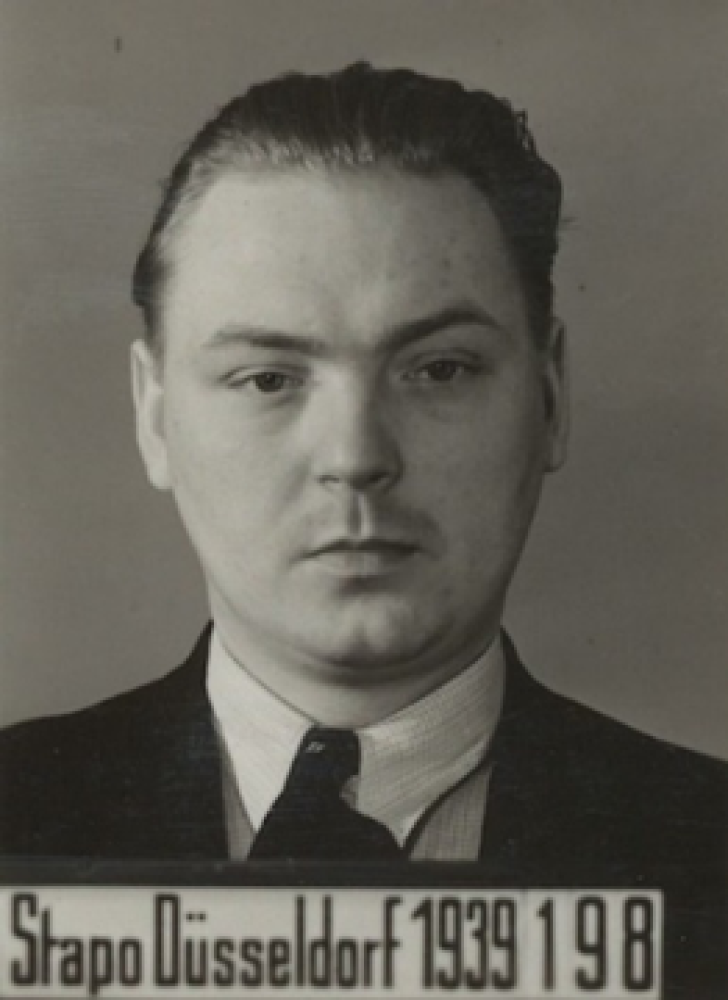
Ernst Schneider 1939

(Landesarchiv NRW - Department Rhineland - RW 0058 No. 55199)

Ernst Schneider was one of at least 15 Jehovah’s Witnesses who survived the British fighter-bomber attack on the ships “Cap Arcona,” “Thielbek,” and “Deutschland” in Neustadt Bay on May 3, 1945. As a young man “fit for military service,” he had quickly come into direct conflict with the Nazi regime at the start of the war.

“The Bible says, ‘Thou shalt not kill,’ and for that reason, becoming a soldier was out of the question for me,” he explained to his superiors at the Rohde und Dörrenberg company in Düsseldorf-Oberkassel in October 1939, when they asked him to join the DAF (German Labor Front).1

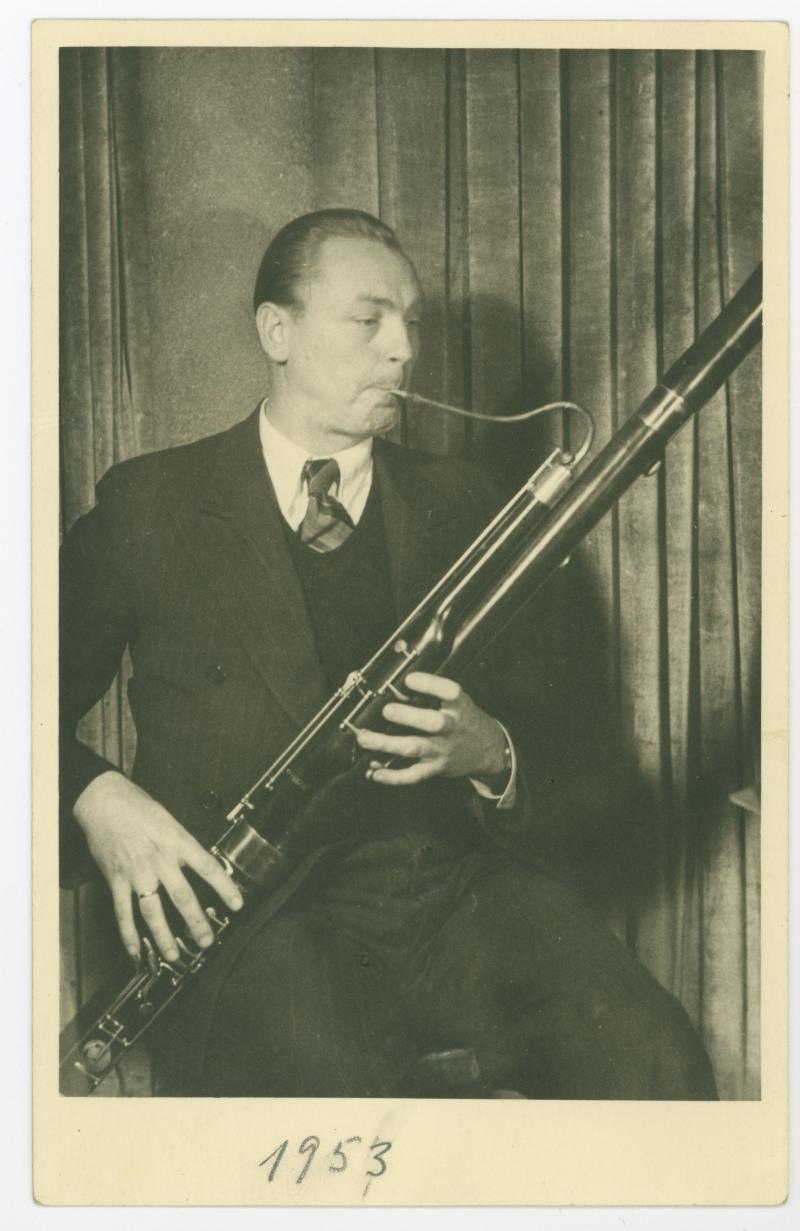
Schneider was born on March 28, 1911, in Düsseldorf, attended the Cologne University of Music, composed his own pieces of music, and was employed by the Düsseldorf City Orchestra during the 1937–38 season. His instrument was the bassoon. Since 1932, he had attended public lectures by the Jehovah’s Witnesses and, despite the ban on the religious community in Prussia in June 1933, continued to profess their principles of faith—which include the equality of all people, political neutrality, and the Christian commandment of love for one’s neighbor.
Denounced and ostracized as a musician

In 1938, four of his colleagues in the symphony orchestra reported him to the State Cultural Administrator and State Director of Music in the Düsseldorf Gau, claiming that, due to his religious convictions,

“refused to give the German salute [sic!]” and “did not consider it necessary to rise from his seat during the German national anthem.”2

The Gestapo arrested and interrogated him, but the public prosecutor’s office did not press charges due to lack of evidence.

“I am only striving to act in accordance with the truths of the Bible,” he explained during the Gestapo interrogation.3

Shortly thereafter, the Reich Music Chamber in Berlin became involved. Schneider lost his position in the orchestra and had to earn a living as a machine operator and construction laborer.

In November 1939, he was arrested for the second time, shortly after he had refused to join the DAF while working at Rohde und Dörrenberg and had consequently lost his new job after only five days. During questioning, he made the following statement, in part:

“The Bible says: ‘All salvation comes only from Jesus Christ.’ I will remain faithful to this principle until the end of my life. I want nothing to do with National Socialist doctrine and will continue to refuse to join the German Labor Front […] or any National Socialist organization [sic!], […] or to participate in an air raid protection course. […] If I am summoned for a physical examination, I will not comply with this summons, because I cannot perform military service or take the oath of allegiance anyway. I refuse to fulfill this civic duty because the Bible says: ‘Thou shalt not kill!’ […] I place my future in the hands of my Creator.”4

Conscientious objection in a concentration camp

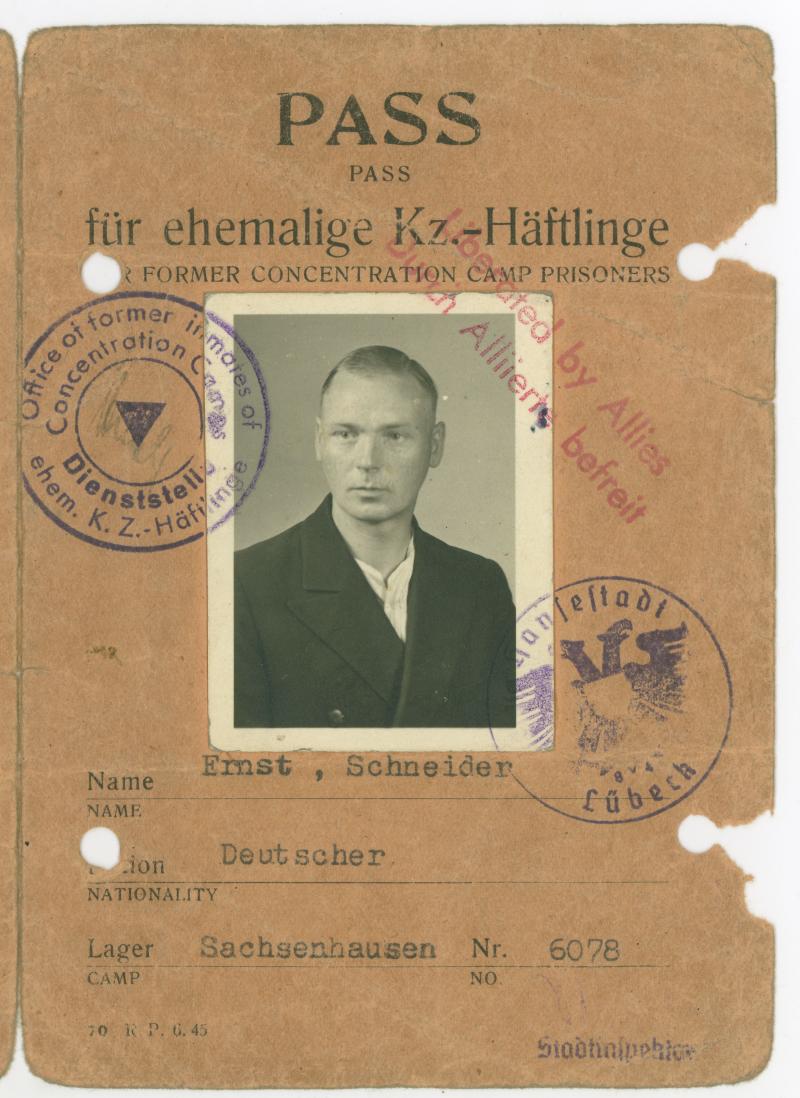
The police doctor confirmed that Ernst Schneider was “fit for work and camp life.” The Gestapo then transferred him to the Sachsenhausen concentration camp, where, like many Jehovah’s Witnesses, he was sent directly to the “punishment company” with prisoner number 6078.5 This meant hard labor at a running pace, even on Sundays, with food deprivation and severe abuse by the SS. The Gestapo file meticulously documents the regular protective custody review dates between January 1940 and February 1944.

Ernst Schneider may have arrived at the Neuengamme concentration camp between March 1 and June 1940.6 There he was assigned prisoner number 793.7

It was extremely rare for the Gestapo to attempt to transfer concentration camp prisoners to the Wehrmacht, as in the case of Ernst Schneider in 1941. The rationale: “In the event of continued defiant behavior, action would be taken against him under military criminal law.”8 A futile endeavor that was not carried out. For most of the Jehovah’s Witnesses imprisoned in concentration camps uncompromisingly refused any participation in the war, as well as work for the Wehrmacht or in the arms industry.9

Concentration camp ships in the Bay of Lübeck

When the evacuation of the Neuengamme concentration camp began on April 20, 1945, Schneider was loaded into a filthy freight car at night along with 22 other Jehovah’s Witnesses as part of a small group of 50 prisoners under SS guard and transported toward Lübeck. Upon their arrival, the prisoners were first crammed into the cargo holds of the Thielbek:

“[It was] impossible […] to stand there untouched for even a moment. Lying down was completely impossible. […] a stench, not a ray of light,” he later wrote in his diary. 10

After 7 or 8 days, the prisoners were loaded onto the ship Athen to be taken to the Cap Arcona. Schneider described how, on the luxury liner, usually 10 prisoners had to share a two-person cabin. The only food was turnip water, and in the evening, a thin slice of bread with a pat of butter.

In his diary, he recorded his memories in detail on May 20, 1945:

“On May 2 […] in the middle of the night, we suddenly heard two loud bangs. […] The door was flung open […] Voices grew loud. Our cabin began to list. […] After a while, it grew quiet again […] and we lay back down on the floor.”11

"The ship is on fire"

Around 3:00 p.m. on the afternoon of May 3, Ernst Schneider was in the large dining room with his friend Willi when the ship suddenly shook. They saw a white flag on the Thielbek. He immediately ran to join his fellow believers in the cabins.

“I suddenly saw English planes through the porthole, flying low directly toward the Cap Arcona. […] Bombs fell, there was a terrible crash. One salvo after another. We feared a boiler explosion. The hallways were filled with thick smoke. You couldn’t breathe anymore. People were running around helplessly in front of all the cabins.”

The guards ordered the prisoners to go back to their cabins.

“Now the ship was listing even more. You could no longer walk upright in the corridors. Fire! The ship is on fire.”

He fought his way up to the deck and saw “huge flames coming out of the cargo hatch.”

“It was probably about 8 meters from [the] railing to the waterline. Many jumped into the water, with and without life jackets, and tried to chain themselves to the rescue ships coming from land. However, during this attempt […] many froze in the cold water. Nor did the lifeboats come any closer to us. The planes circled over our ship.”

Hundreds of prisoners, standing pressed tightly together on the foredeck, “waved their handkerchiefs or rags toward the planes […] and now the white [sic!] flag could be seen on our ship. But unfortunately, it was too late. Now one could also observe how the ship […] was bombed by Germany and, after a few minutes, was ablaze. And the Thielbek sank within 30 minutes. Our [faith] brothers were also on both ships.”

After about 2 hours, “the ship quickly capsized. And we were thrown into the water one after the other, even though we tried to hold on to each other. […] One clung to the other.”

Ernst Schneider swam back to the ship, which was red-hot and, by his estimate, still protruded about 7 meters above the water, and was able to hold on for a while in one spot together with his friend Karl.

“The guards who were on the sinking ship [fired] at defenseless prisoners trying to save themselves,” documented Ernst Schneider.

Rescue

Alfred Knegendorf, a fellow believer and sailor, pulled him and about 20 other prisoners up onto the ship’s iron hull using a rope. For many hours, several hundred people now waited on the capsized keel of the Cap Arcona. Even in this desperate situation, Ernst Schneider encouraged two Russian fellow prisoners and told them about the message of hope in the Bible. 12 Rescue did not come until around 10 p.m.

“Meanwhile, a lifeboat pulled up and took about 300 to 310 survivors ashore. A marine was kind enough to give me his own military coat, […] because I was very cold.”

British soldiers took the survivors to a barracks.

In late May 1945, shortly before setting off for his hometown of Düsseldorf, he wrote:

“During my walks along Neustadt Bay […] when I look out over the water, we can see in the distance the spot where our ship, the Kap Arkona [sic!], juts out of the sea, along with the many victims who were forced to suffer death by burning, suffocation, and drowning.”

Illustrations

GED 13 006 300.004 1 b

Passport for former concentration camp prisoners, May 1945

(Memorial and memorial site of the state capital Düsseldorf, GED-13-006-300.004)

GED 13 006 300.005 2 b

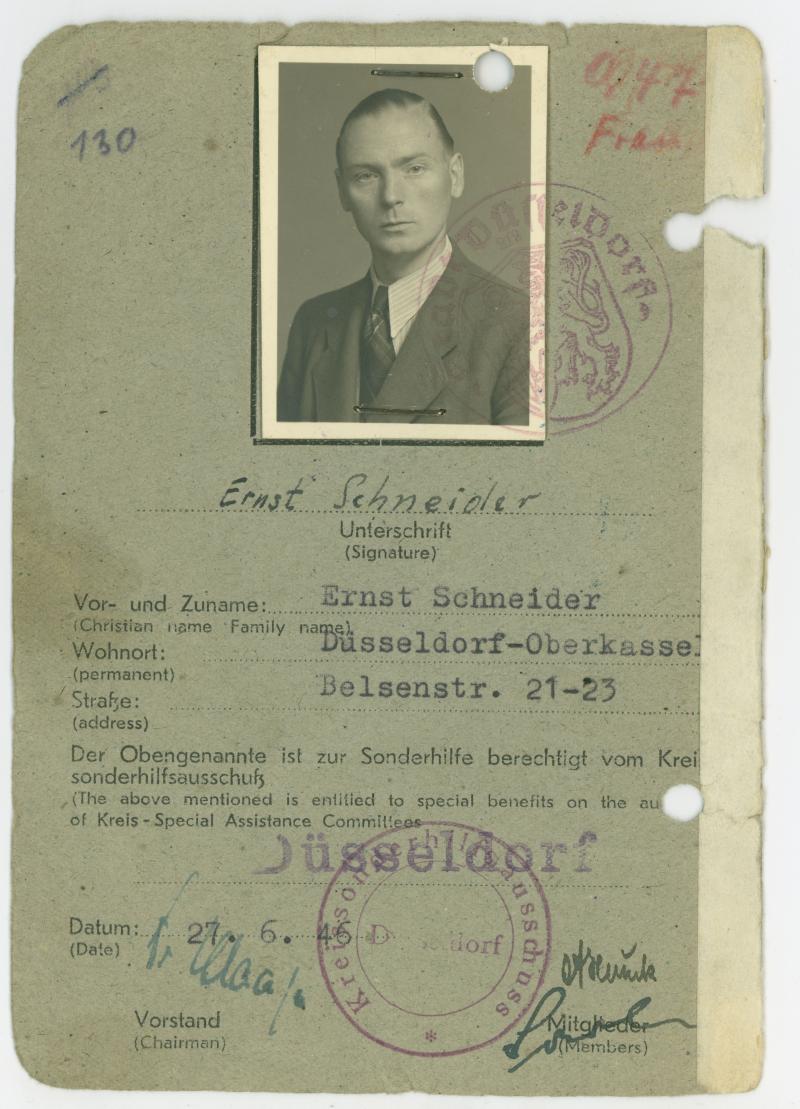
Ernst Schneider's special pass for victims of Nazi persecution dated June 27, 1946

(Memorial and memorial site of the state capital Düsseldorf, GED-13-006-300.005)

Ernst Schneider 1953

GED 13 006 300.002 1 b

Ernst Schneider 1953

(Memorial and memorial site of the state capital Düsseldorf, GED-13-006-300.002)

Memorial sign

Since 2015, the story of Ernst Schneider has been featured on an informational display at the Düsseldorf Memorial and Remembrance Center as part of the permanent exhibition “Children and Young People in Düsseldorf under National Socialism.” (The Memorial – Friends of the Düsseldorf Memorial and Remembrance Center, Inc.)

Literature

Information on literature is not translated

Garbe, Detlef: Zwischen Widerstand und Martyrium. Die Zeugen Jehovas im „Dritten Reich“, München 1997

Schön, Heinz: Die Cap Arcona-Katastrophe. Eine Dokumentation nach Augenzeugenberichten, Stuttgart 1989.

Footnotes

Information on sources is not translated
  • 1

    Landesarchiv NRW, Abteilung Rheinland, Akte RW 58 Nr. 55199, Bl. 20.

  • 2

    Landesarchiv NRW, Abteilung Rheinland, Akte RW 58 Nr. 55199, Bl. 6.

  • 3

    Landesarchiv NRW, Abteilung Rheinland, Akte RW 58 Nr. 55199, Bl. 13.

  • 4

    Landesarchiv NRW, Abteilung Rheinland, Akte RW 58 Nr. 55199, Bl. 24.

  • 5

    Arolsen Archives, Veränderungsmeldungen des KL Sachsenhausen, ID 1.1.38.1/4094646.

  • 6

    Arolsen Archives, namentliche Aufstellungen über ehemalige Häftlinge des KL Neuengamme, „Liste der Überlebenden und deren Angehörige“ von der „Arbeitsgemeinschaft Neuengamme“, ID 1.1.30.1/3423336 und ID 1.1.30.1/3423343.

    KZ-Gedenkstätte Neuengamme, Stellungnahme Dr. Karsten Uhl in der Mail an Sandra Breedlove vom 30.8.2024: „Die Quellenlage zum KZ Neuengamme ist leider besonders schlecht, weil die SS fast alle Unterlagen vor der Räumung des Lagers zerstörte. Da wir die Haftnummern der beiden [Ernst Schneider und Erich Lehmann] aber kennen, wissen wir dass sie (wie alle mit Haftnummern bis 850) bis Juni 1940 aus Sachsenhausen nach Neuengamme kamen. Aus Erinnerungsberichten und einzelnen WVHA-Karten wissen wir von einem Transport am 1. März 1940 mit 120 Männern, die aus Sachsenhausen nach Neuengamme gebracht wurden, darunter waren viele Zeugen Jehovas. Plausibel wäre es anzunehmen, dass Scheider und Lehmann darunter waren. Die Transportliste liegt uns aber leider nicht vor.“

  • 7

    KZ-Gedenkstätte Neuengamme, Mail von Dr. Karsten Uhl an Sandra Breedlove vom 29.8.2024, Angabe der Gefangenennummer 793 zu Ernst Schneider stammt aus dem Nachlass von Hans Schwarz, Überlebender der Cap Arcona-Katastrophe.

  • 8

    Landesarchiv NRW, Abteilung Rheinland, Akte RW 58 Nr. 55199, Bl. 41.

  • 9

    Der Historiker Detlef Garbe erklärt: „Nach Kriegsbeginn kamen in die Gefängnisse und Konzentrationslager Musterungskommissionen der Wehrbezirkskommandos, um die noch nicht gemusterten wehrpflichtigen Häfntlinge auf ihre Kriegstauglichkeit hin zu untersuchen. Da das Gestapa [Geheime Staatspolizeiamt Berlin] die ‚Freistellung zum Wehrdienst‘ bei Bibelforschern jedoch nur verfügte, wenn diese sich zuvor vorbehaltlos und ‚glaubhaft‘ zur Wehrdienstleistung bereit erklärt hatten, verblieben die kriegsdienstverweigernden Zeugen Jehovas in der Gewalt der Gestapo. Versuche, Bibelforscher-Häfltinge auch ohne Bereitschaftserklärung an die Wehrmacht zu überstellen, bewiesen die Sinnlosigkeit dieses Unterfangens: Wegen der von den Überstellten eingenommenen kompromisslosen Verweigerungshaltung konnte man der Wehrmacht auf diese Weise nur Fälle für ihre Gerichtsbarkeit, aber keine Soldaten zuführen.“ Detlef Garbe, Zwischen Widerstand und Martyrium. Die Zeugen Jehovas im „Dritten Reich“, München 1997, S. 401.

  • 10

    In der Sammlung der Mahn- und Gedenkstätte der Landeshauptstadt Düsseldorf ist ein Tagebuch von Ernst Schneider erhalten. Es enthält einen ausführlichen Bericht über die Ereignisse der Evakuierung des KZ Neuengamme ab 20. April 1945 bis zum Untergang der Cap Arcona am 3. Mai 1945 sowie seiner Befreiung und Weiterreise nach Düsseldorf, den er am 20. Mai 1945 verfasste. Mahn- und Gedenkstätte Düsseldorf, Sammlung 13-006-300.002-008.

  • 11

    Heinz Schön schreibt über die Zustände auf der Cap Arcona in der Nacht vom 2./3. Mai 1945, dass die sogenannte „Aktion Regenbogen“ angelaufen war. „Unter diesem vom Oberkommando der Kriegsmarine ausgegebenen Stichwort haben sich, alle Kriegsschiffe und Hilfsbeischiffe der Kriegsmarine sofort selbst zu versenken‘. Das geschieht in dieser Nacht. Allein in der Lübecker Bucht und Neustädter Bucht fliegen jetzt 36 Unterseeboote in die Luft, nachdem sie von ihren Besatzungen verlassen wurden. Die Detonationen sind bis unter die Decks der Cap Arcona zu hören.“ In: Heinz Schön, Die Cap Arcona-Katastrophe. Eine Dokumentation nach Augenzeugenberichten, Stuttgart 1989, S. 205.

  • 12

    Detlef Garbe, Zwischen Widerstand und Martyrium. Die Zeugen Jehovas im „Dritten Reich“, München 1997, S. 441.

Recommended citation for this article

Sandra Breedlove: Ernst Schneider, in: Cap-Arcona-Portal (Publication date 12.03.2026), https://cap-arcona-portal.de/en/artikel/ernst-schneider [2026]